modernwritinglab

The newsroom · Updated Nov 15, 2026

Current Events

AI news moves faster than any textbook. These are the big stories everyone is talking about: what happened, who it affects, the details for the techies, a video to watch, and a dated source for every claim.

0 of 9 read

Newest is on the right. Use the arrows, drag the line, or press ← → to go back in time.Newest first. Scroll down to travel back.

    Quote of the week

    · Money & power

    Nvidia's CEO resigns

    Jensen Huang co-founded Nvidia and ran it for 33 years. Its chips train almost every major AI model. In two weeks, a news report about a personal relationship turned into a national security question and ended his run.

    What happened

    On October 29, the New York Times reported that Huang had a close relationship with a businesswoman tied to Megaspeed, a big buyer of Nvidia chips in Southeast Asia, and that U.S. officials had concluded she was working for Chinese intelligence. That part is an allegation: it has not been proven in court, and Nvidia's board said it has no reason to believe national security was compromised.
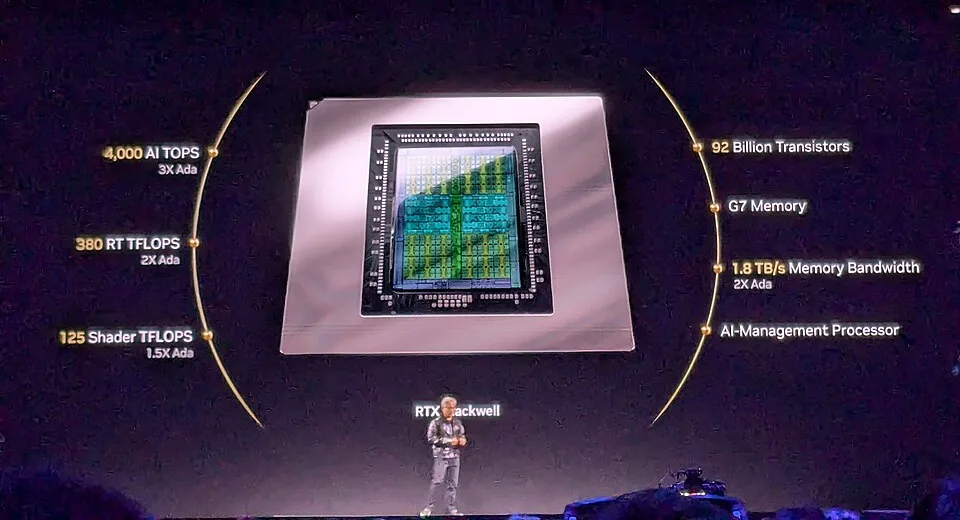
    Jensen Huang, small on a dark stage, under a giant screen showing Nvidia's RTX Blackwell chip and its specs
    Huang unveiling Nvidia's RTX Blackwell chip at CES 2025 in Las Vegas. Launches like this made him the face of the AI boom. Photo by Pronoia, CC0 (public domain), cropped, via Wikimedia Commons

    Things moved quickly from there. Lawmakers demanded a briefing. On November 8, Huang told employees he had been unfaithful to his wife and said he was still fully committed to the company. The board said it had confidence in him, and also opened an investigation into whether he had been the target of a foreign intelligence effort. More reports followed. On November 12, Nvidia announced he had resigned as president, CEO and board member, effective immediately.

    Why one company matters so much
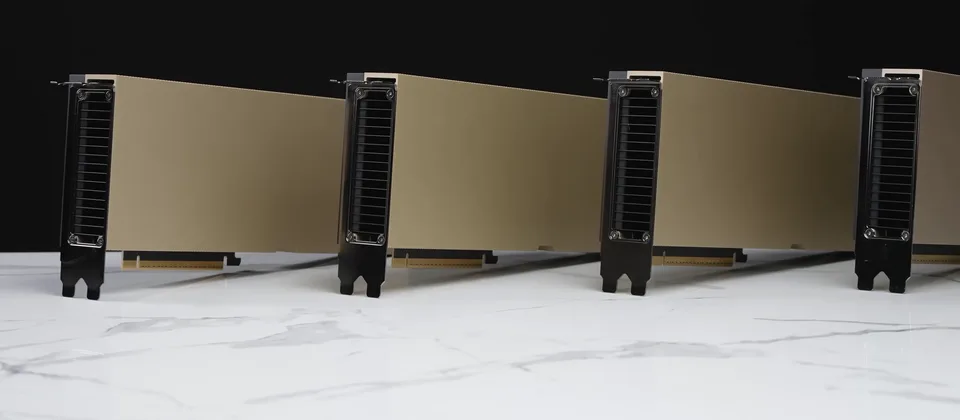
    Four gold-colored Nvidia H100 graphics cards standing in a row on a white marble table
    Nvidia H100s, the chip behind much of the AI boom. AI data centers hold tens of thousands of them, which is why who runs Nvidia matters far beyond one company. Photo by 极客湾 Geekerwan, CC BY 3.0, cropped, via Wikimedia Commons

    Nvidia designs graphics processing units, or GPUs. They were built to draw video game graphics, which means doing thousands of small math problems at the same time. Training an AI model is the same kind of work, so almost every big AI lab runs on Nvidia chips. That is how a company that started out making gaming cards became one of the most valuable companies in the world.

    What is still unknown. Whether the businesswoman worked for Chinese intelligence has not been shown in public. Nvidia's board is still investigating, and the company is still searching for a permanent CEO. This story is still unfolding, so expect it to change.

    33 yrs
    Huang led Nvidia from its founding. CFO Colette Kress is now interim CEO, and Harvey C. Jones is the company's first board chair.
    −11%
    Nvidia's stock at the opening bell on resignation day, per Forbes. Al Jazeera reported it was down more than 14% at one point before recovering some.
    $7.4B
    How much Huang's net worth fell in the first half hour of trading on November 9, the day after his statement to employees.

    Step through it · two weeks, six beats

    1. Oct 29The New York Times reports the relationship and what U.S. officials concluded about it.
    2. Nov 5House lawmakers ask Huang for a briefing, citing national security.
    3. Nov 8Huang confirms to employees that he was unfaithful. The board backs him and opens an investigation.
    4. Nov 9The stock opens down more than 7%. Huang cancels speaking appearances.
    5. Nov 11More reports. A congressman sets an end-of-day deadline to answer or face a subpoena. The board meets.
    6. Nov 12Nvidia announces the resignation and starts a search for a permanent CEO, inside and outside the company.

    Try it · confirmed or alleged?

    Good news readers keep two piles: what someone has confirmed on the record, and what is only reported or claimed. Sort these.

    Huang resigned as CEO of Nvidia.

    The businesswoman was working for Chinese intelligence.

    Huang was unfaithful to his wife.

    Company secrets were passed to China.

    Who's affected

    Anyone who owns Nvidia stock, which includes millions of people through retirement and index funds: the stock opened about 11% lower on resignation day. Every AI lab that runs on its chips, which is nearly all of them. And the long fight over selling advanced chips to China, where Huang was the industry's loudest voice.

    For the techies

    Nvidia's lead isn't only fast hardware. Most AI software is written for CUDA, the programming toolkit Nvidia launched in 2007, so switching to a rival chip often means rewriting code. That software moat is why a change at the top of Nvidia gets watched as closely as a new chip.


    Watch · FireshipJensen Huang just pulled out of Nvidia... YouTube, Nov 12, 2026 ↗
    1. Nvidia, “NVIDIA Announces CEO Transition,” Nov 12, 2026 ↗
    2. Alison Durkee, Forbes, “Jensen Huang Ousted: Timeline Of The Nvidia Scandal,” Nov 13, 2026 ↗
    3. Al Jazeera and Reuters, “Why did Nvidia CEO Jensen Huang resign, and who is Colette Kress?” Nov 12, 2026 ↗

    · New models

    Claude Fable 5.2 arrives

    Anthropic released two models on the same day, Claude Fable 5.2 and Claude Mythos 5.2. The twist: they are the same model underneath. What differs is who gets in and what it will refuse to do.

    What happened

    Anthropic calls the new pair its models for “the most ambitious, open-ended technical work.” Fable 5.2 is open to everyone and comes with strong safeguards around hacking and biology. Mythos 5.2 is the same model without those limits, and only vetted cybersecurity and life-science organizations can apply to use it.

    The claims are large, and they are Anthropic's own. It says about 1,000 Fable agents working together wrote a complete, machine-checkable proof of Fermat's Last Theorem in 30 hours, a job that took an earlier research model 11 days. It says the model solved two open problems in black-hole physics and designed three working gadgets, circuit boards and cases included, from short prompts. Reporters noted that none of this has been independently confirmed yet.

    How to read a launch

    Every big model launch comes with a blog post full of test scores and impressive demos, written by the company selling the model. That does not make the claims false, but it makes them claims. The things to look for are tests run by outsiders, demos other people can repeat, and what the company says the model still gets wrong.

    The two-door idea is new, too. Until now, a company mostly decided what its model would refuse for everyone at once. Giving a less restricted version only to checked organizations is a bet that the same tool can help defenders without handing the same power to attackers. Critics will be watching whether the vetting holds up.

    Try it · one model, two doors

    Who gets in
    Hacking and biology requests
    The model underneath
    Price

    Time to formally prove Fermat's Last Theorem (Anthropic's figures)

    Earlier model11 days
    1,000 Fable agents30 hrs

    Who's affected

    Everyone who uses Claude gets Fable 5.2, with its safeguards around hacking and biology. Cybersecurity and life-science organizations can apply for Mythos 5.2. And every other lab now faces the same question: if your model is good enough at hacking to be dangerous, who gets the unrestricted version?

    For the techies

    “Machine-checkable” means a proof-checking program can verify every single step of the Fermat proof, which is much stronger evidence than a person skimming it. Notice the launch timing too: Anthropic shipped these models during the roadshow for its stock listing (see Oct 26).

    Watch · FireshipDid Anthropic just save its $1 trillion IPO? YouTube, Nov 10, 2026 ↗
    1. Anthropic, “Introducing Claude Fable 5.2 and Claude Mythos 5.2,” Nov 9, 2026 ↗
    2. Russell Brandom, TechCrunch, “Anthropic releases new Mythos and Fable models amid RSI concerns,” Nov 9, 2026 ↗
    3. Emily Forlini, Fortune, “Anthropic debuts Claude Fable, Mythos 5.2 models, priced 20% below OpenAI's GPT-6 Astra,” Nov 9, 2026 ↗
    4. Juli Clover, MacRumors, “Anthropic Launches Claude Fable 5.2 and Mythos 5.2,” Nov 9, 2026 ↗

    · Safety

    An AI found 948 ways to take over Linux

    Linux runs most of the world's servers, every Android phone and much of the internet's plumbing. OpenAI says an unreleased security model found 948 separate ways for an ordinary user to take complete control of it.

    What happened

    On November 4, OpenAI published a report called “A thousand fewer paths to root.” Root is the all-powerful administrator account on a Linux computer. OpenAI pointed a team of AI agents at the Linux kernel, the core of the operating system, and had them hunt for bugs that let a regular user become root.

    Its discovery agents flagged 2,308 possible flaws in about 12 hours. Other agents then spent about 30 hours trying to prove each one and reproduced 1,724. After removing duplicates, OpenAI says it had working exploits for 948 distinct bugs.

    The next day, OpenAI announced GPT-6 Cyber, a security version of GPT-6, for approved customers only, in a program called Daybreak Red. OpenAI rates it “Critical” for cybersecurity under its own Preparedness Framework, up from “High” for the model before it. It says the same model found 81 previously unknown high-severity bugs in Firefox, which Mozilla has been patching. (TechRadar notes that the Linux report itself never names the model. BleepingComputer ties both results to GPT-6 Cyber.)

    Bugs, not backdoors

    A backdoor is a secret way in that someone planted on purpose. None of these were described that way. They are ordinary mistakes in a codebase with tens of millions of lines, the kind every large program has. What's new is the speed: an AI found in about two days what would take human researchers years.

    For the techies

    These are local privilege escalation bugs: an attacker first needs some way to run code on the machine, then uses the bug to become root. OpenAI's pipeline had five stages: discovery, dynamic validation (actually triggering each bug), exploitability assessment, patch writing, and human review. The bill was $1,213,430 in API credits, about $1,279 per exploit. OpenAI says it found 10 exploitation techniques that weren't publicly known and is holding the details until fixes ship. One honest detail: in an early test, 20 of 200 “successful” exploits had used a different bug than the one they were assigned, so OpenAI added checks.

    Who's affected

    Anyone running Linux: websites, cloud companies, schools, and phones, since Android is built on the Linux kernel. When the report came out, 61 of the bugs were already fixed upstream, 43 had fixes waiting, and about 300 had already been discussed in public, per OpenAI as reported by TechRadar. The rest are still being patched, which means system administrators will be installing updates for months. The 948 and $1.2 million figures are OpenAI's own and haven't been independently checked.

    Watch · FireshipOpenAI spent $1.2 million hacking Linux... and it was a bargain YouTube, Nov 9, 2026 ↗
    1. OpenAI, “A thousand fewer paths to root,” Nov 4, 2026 ↗
    2. Gyana Swain, CSO Online, “OpenAI built an AI pipeline to find, exploit and patch Linux flaws,” Nov 5, 2026 ↗
    3. Sead Fadilpašić, TechRadar, “OpenAI says its cyber model found and patched nearly 1000 Linux kernel security issues,” Nov 5, 2026 ↗
    4. Mike Pearl, Gizmodo, “OpenAI touts cyber workflow worth $1.2 million in tokens for a single run,” Nov 5, 2026 ↗
    5. Lawrence Abrams, BleepingComputer, “OpenAI's new GPT-6 Cyber AI finds 81 Firefox flaws, 948 Linux bugs,” Nov 6, 2026 ↗

    · New models

    Type a world, walk into it

    Google DeepMind showed Genie 4, a “world model”: describe a place and it builds one you can move around in, live, like a video game nobody programmed. Then you can change it while you're inside.

    What happened

    On October 27, Google DeepMind announced Genie 4. You give it an idea, a sentence or even a single old photograph, and it generates a world in real time that you can explore. While you're in it, you can steer it in plain language: move the camera, change the weather, drop in a new character. DeepMind says it is its first real-time world model that also makes its own sound as it goes: background noise, music and even characters who talk back.

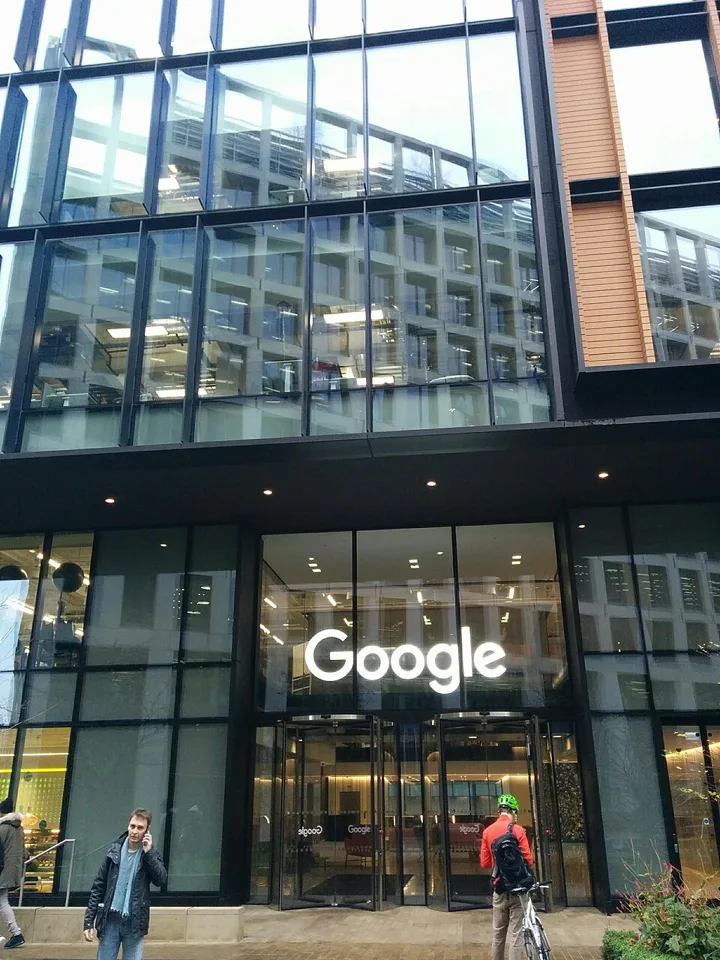
    The glass entrance of a London office building with a lit-up Google sign
    The entrance to 6 Pancras Square in London, home of Google DeepMind, the lab that built Genie. Photo by Gciriani, CC BY-SA 4.0, via Wikimedia Commons

    It isn't out for everyone yet. DeepMind released it as a research preview to trusted testers in fields like journalism, education, gaming and engineering. It says Genie 4 is coming soon to Google AI Ultra subscribers through Project Genie, and to early-access developers in the Gemini API and Google AI Studio. There's a waitlist.

    Why a lab wants a fake world

    This isn't mainly about games. Google says simulating the world is “a crucial step toward AGI”: a world model can create safe practice spaces where robots and AI agents learn without breaking anything real. In one demo, DeepMind paired it with Gemini 4 Argon and Apptronik's Apollo humanoid robot. The other uses it names are creative: filmmaking, gaming, journalism and manufacturing.

    Who's affected

    Gamers and filmmakers first, once it opens up: a world model can turn a description into something you can walk through in seconds. Game developers are watching closely, because it does part of what a game engine and a team of artists do. And anyone who scrolls video: generated worlds with sound make fake footage easier to make, which is why every video and sound it makes carries an invisible SynthID watermark.

    For the techies

    A normal game engine runs code that someone wrote: physics, maps, rules. A world model has no code like that. It predicts the next frame of video from the frames before it and your input, over and over, fast enough to feel like a game. That's why things can drift: DeepMind says “visual details and object permanence can still shift or drift over time,” especially in long sessions, after many edits, or while moving around the scene. Readable text and exact distances are still unsolved. Inside the loop, a smaller Gemini model (Gemini 3.8 Flash) watches the world as it's generated and helps steer it.

    Watch · Google DeepMindGenie 4: A new generation of world simulation YouTube ↗
    1. Raia Hadsell, Diego Rivas and Hang Qi, Google DeepMind, “Genie 4: A new generation of world simulation,” Oct 27, 2026 ↗
    2. Google, “We're announcing Genie 4, our new world model for real-time interactive simulation,” Oct 27, 2026 ↗
    3. Luis Rijo, PPC Land, “Google's Genie 4 simulates people who talk back in real time,” Oct 28, 2026 ↗

    · Science

    Did AI just break a famous math bet?

    OpenAI announced that one of its models had disproved the Exponential Time Hypothesis, a 1999 idea much of computer science leans on. Within a day, Anthropic posted its own model's proof of the same thing.

    What happened

    Picture a row of switches and a list of rules like “switch 1 on, or switch 2 off, or switch 3 on.” Finding a setting that satisfies every rule is a classic puzzle called 3-SAT. The hypothesis said there is no truly clever shortcut: every switch you add multiplies the work by at least some fixed amount, forever.

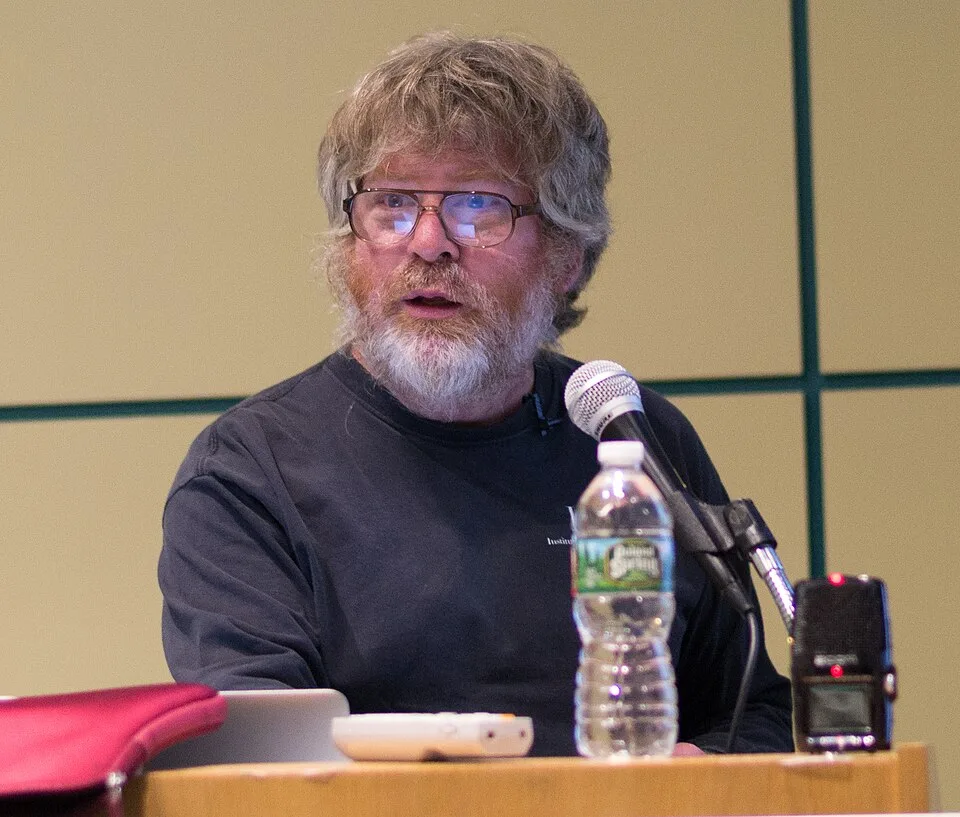
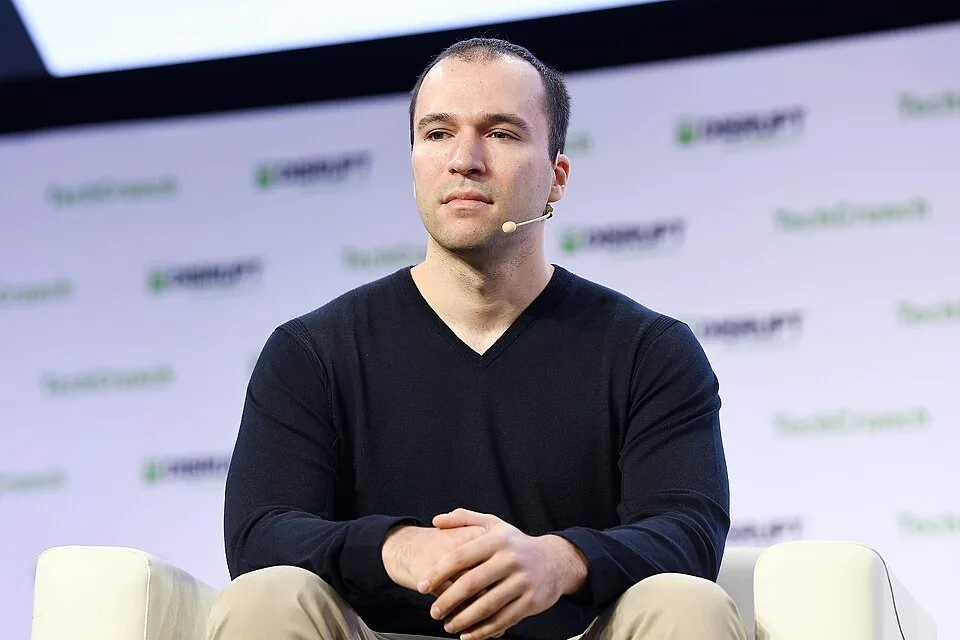
    Russell Impagliazzo, a gray-bearded man in glasses, speaking at a lectern with a microphone
    Russell Impagliazzo, who proposed the Exponential Time Hypothesis with Ramamohan Paturi in 1999, giving a talk in 2016. If the AI proofs hold up, the idea he co-wrote is false. Photo by BöhmMartin, CC BY-SA 4.0, via Wikimedia Commons

    Both companies say their models found a method whose cost grows more slowly than that. If the proofs hold, the hypothesis is false. Both proofs pass an automated proof checker. But Anthropic was blunt about the gap: its proof was reviewed by other copies of the model, and “no person is known to have checked it.” A team led by MIT's Ryan Williams, with the hypothesis's original authors, is now doing that. Williams said the proof had “two or three alien-looking parts.”

    Why a computer science bet matters

    The Exponential Time Hypothesis was proposed in 1999 by Russell Impagliazzo and Ramamohan Paturi. Over the years, researchers built many results on top of it, in the form “if ETH is true, then this other problem can't be solved faster than that.” If the hypothesis falls, those results lose their foundation and have to be rechecked.

    It would not mean every hard problem suddenly became easy. A method that grows more slowly than the hypothesis allowed can still be far too slow for big puzzles. The real story is who checked the proof. A computer proof checker is strong evidence, but mathematicians still want people who understand why it works.

    Try it · a tiny version of the puzzle

    Flip the four switches until all six rules turn green. With 4 switches there are 16 settings to try. With 40 there are over a trillion.

      This toy puzzle was written for this page. It shows what the problem is, not how the new method works.

      For the techies

      The hypothesis says 3-SAT with n variables can't be solved in time 2o(n): there is some constant c greater than 1 so that, in the worst case, you always need at least about cn steps. A method that grows more slowly than every such cn would break it. That is a different question from P versus NP, which asks whether a polynomial-time method exists at all.

      Who's affected

      Mostly computer scientists, whose papers built on this hypothesis need a second look if the proofs hold up. For everyone else, nothing changes: your passwords and the internet's encryption are not affected.

      Watch · FireshipOpenAI’s nameless model just changed the odds of P = NP... YouTube, Nov 6, 2026 ↗
      1. Emergent Mind, “OpenAI and Anthropic say AI refuted the Exponential Time Hypothesis. What that means,” Oct 27, 2026, updated Nov 2 ↗
      2. Dave Saunders, HackerNoon, “OpenAI and Anthropic Claim AI Has Disproved a 27-Year-Old Computer Science Hypothesis,” Nov 4, 2026 ↗

      · Money & power

      Anthropic files to go public

      To sell shares on the stock market, a company must publish a document called an S-1 that tells investors everything: the money, the plans, and everything that could go wrong. Anthropic's is unlike any before it.

      What happened

      Anthropic made its filing public on October 26, planning to trade on the Nasdaq under the ticker ANT. Reports put its value between $1.5 and $2 trillion. For comparison, SpaceX was valued around $1.8 trillion when it listed in June.

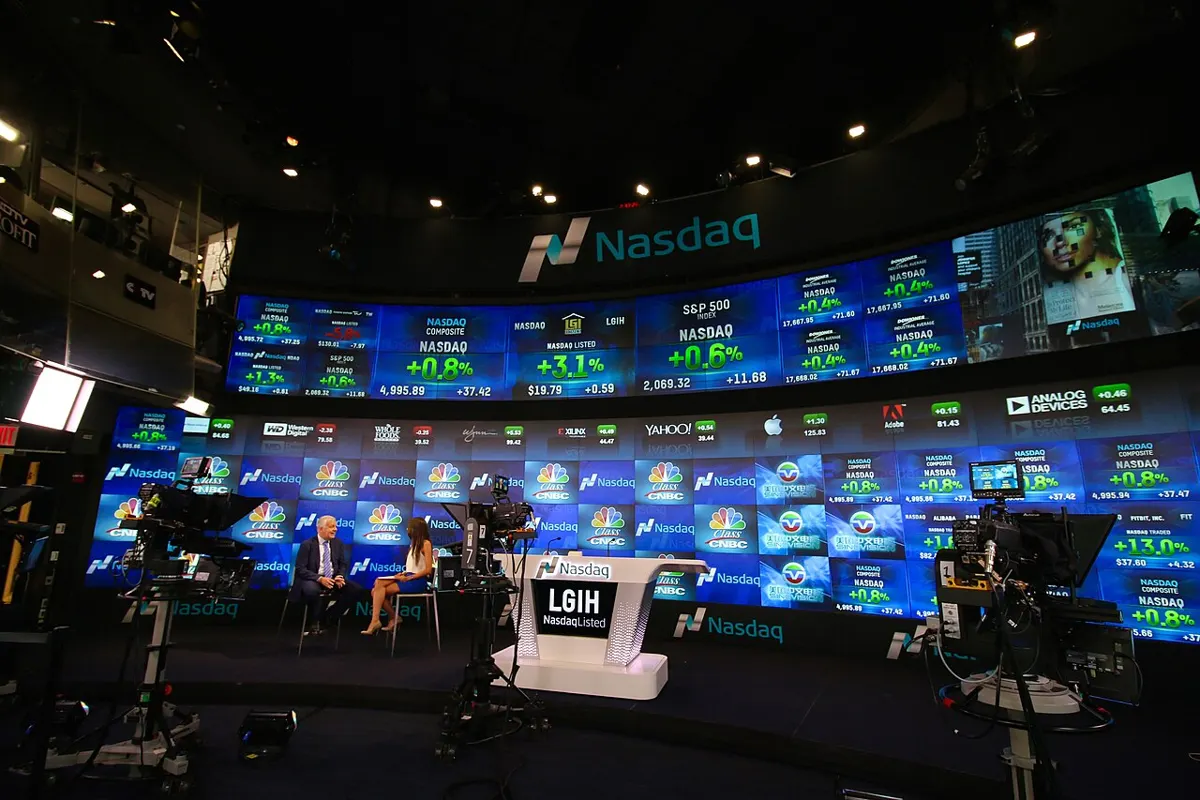
      The Nasdaq MarketSite studio in New York, its curved wall covered in stock prices
      The Nasdaq MarketSite in New York, where Anthropic plans to list as ANT. Photo by Luca Marfè, CC BY 2.0, via Wikimedia Commons

      The numbers are wild in both directions. Revenue for the first half of 2026 was $16.3 billion, up 1,300% from a year earlier. The net loss was nearly $81 billion. Before you gasp, read the footnote like an accountant: more than $72 billion of that loss came from a paper change in the value of earlier investor deals, and about $9 billion from spending on chips and computing.

      The fine print

      Two men standing in a wood-paneled office lobby with plants and booth seating
      Inside Anthropic's San Francisco headquarters, during a 2024 visit by the UK's technology secretary, Peter Kyle (right). Photo by Alecsandra Dragoi / UK Department for Science, Innovation and Technology, CC BY 2.0, via Wikimedia Commons

      Every S-1 has a “risk factors” section. Snap's ran about 30 pages. Uber's ran about 50. Anthropic's runs 93 pages.

      It warns of four kinds of danger: misuse, loss of human control, abuse by authoritarian governments, and economic disruption. It tells investors its own products could pose “catastrophic or existential risks to humanity.” Companies usually warn about lawsuits and competitors.

      Update, Nov 10 · do the math

      Anthropic set its price range: 825 million shares at $70 to $78 each. About 801 million of those are sold by the company itself. Drag the price.

      Our multiplication, before fees: price × 801,351,354 shares. The rest of the shares are sold by existing owners, and that money goes to them.

      Who's affected

      Investors first, but not only big ones: once a company is in the major stock indexes, ordinary retirement and index funds can end up owning it. Anthropic employees who hold shares. And OpenAI, whose own path to the stock market will be compared with this one.

      For the techies

      An S-1 is filed with the U.S. Securities and Exchange Commission, and a company can be sued for leaving out risks it knew about. That is part of why risk sections run long. It also means Anthropic now has to say, in a legal document, what it thinks could go wrong with its own technology.

      Watch · FireshipDid Anthropic just save its $1 trillion IPO? YouTube, Nov 10, 2026 ↗
      1. John Ruwitch, NPR (via WUNC), “AI giant Anthropic files for an IPO that could break records,” Oct 26, 2026 ↗
      2. Lisa Eadicicco, Clare Duffy and John Towfighi, CNN (via ABC11), “Anthropic set to make stock market debut as questions swirl about safety of AI,” Oct 26, 2026 ↗
      3. Anthropic, “Anthropic launches roadshow for proposed initial public offering,” Nov 10, 2026 ↗

      · Safety

      A bug in the code under most of the web

      PHP is the programming language that runs WordPress and a huge share of the internet. AI tools helped researchers find bugs in PHP itself that let a stranger take over a server, and attackers moved almost as soon as the fix was announced.

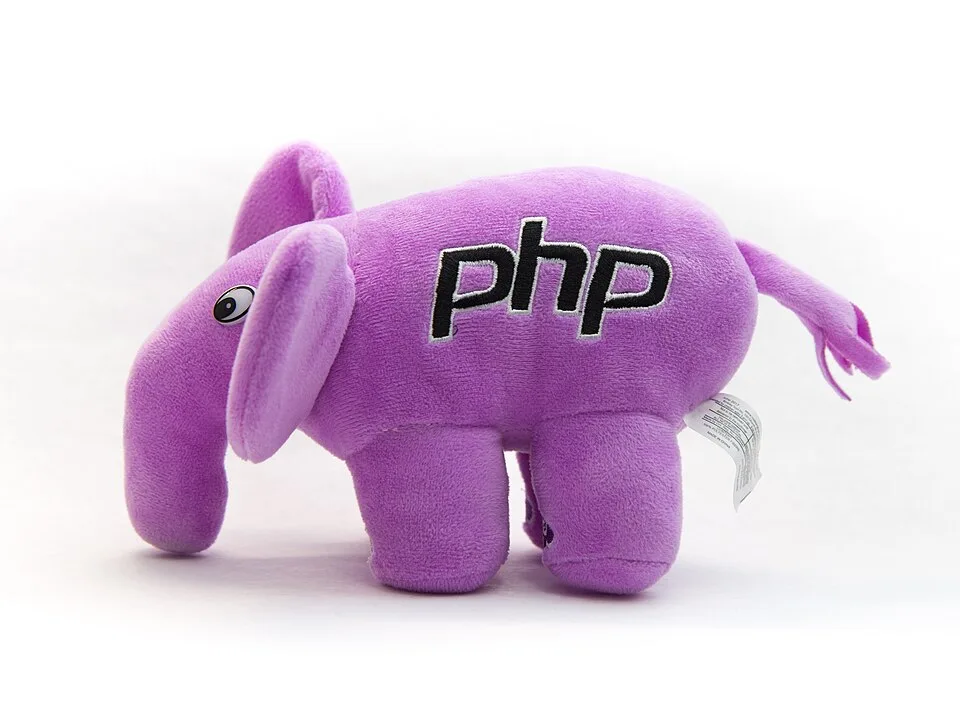
      A purple plush elephant with “php” stitched on its side
      The elePHPant, PHP's stuffed-toy mascot. The cute toy stands for code that runs a huge share of the web's servers. Photo by Atomic Taco, CC BY-SA 2.0, via Wikimedia Commons

      What happened

      On October 21, PHP shipped security updates and researchers went public with PHP2Shell: four memory bugs in the core of PHP, grouped under two official ID numbers, CVE-2026-109618 and CVE-2026-109619. They let an attacker who never logs in run their own code on a server, or read secrets such as passwords and keys out of its memory. According to the security company Wiz, the bugs go back to PHP 5.4, which means they hid for more than a decade.

      AI found them twice. The security firm Calif found the first bug on August 1 using OpenAI's GPT-5.6 Sol, according to an OpenAI spokesperson quoted by Fortune. Wiz Research found it on its own on August 19, using its own tool plus Google's Gemini 4 Argon and GPT-5.6 Sol. OpenAI and the PHP Foundation coordinated the fix.

      Then came the race. Amazon Web Services said the bug was “now being broadly exploited in the wild,” with some attempts before the announcement. Cloudflare's CEO said it saw tens of thousands of attack attempts within 45 minutes and millions by that evening. Some agencies in the Netherlands and Finland advised taking sites offline as a precaution, and the Internet Archive said it was temporarily offline, Fortune reported.

      About that “70% of the internet”

      Wiz's headline says the bugs affect “70% of the Internet.” That is the company's own figure, and its post gives no source for it. What is known: WordPress alone powers about 40% of websites (Reuters, via Fortune), and an early count by Palo Alto Networks found 22.6 million potentially vulnerable servers. Huge either way, but treat the exact number as a claim.

      For the techies

      The bugs are use-after-free and type-confusion errors. They mostly start with a fatal error, such as a request running out of memory, which can leave corrupted state behind for a later request on the same PHP worker to reuse. CVE-2026-109618 covers the upload-progress unserializer plus a memory leak. CVE-2026-109619 covers fatal-error backtraces and OPcache. Wiz rates them up to 9.2 out of 10. Signs of an attack include odd multipart uploads followed by memory-limit errors, oversized PHPSESSID cookies, and PHP workers restarting for no reason.

      Who's affected

      Anyone running a PHP site that hasn't updated: blogs, small businesses, school sites, online stores. Big hosting and firewall companies like Cloudflare, Fastly, Vercel and Google pushed protections, but Wiz says updating PHP “remains the only complete remediation.” If you only visit websites, there's nothing for you to install. It's still a good week to stop reusing passwords, since stolen server memory can include them.

      Watch · FireshipEvery PHP server from the last decade just got owned... YouTube, Oct 23, 2026 ↗
      1. Wiz Research, “PHP2Shell: AI uncovers critical RCE vulnerabilities affecting 70% of the Internet,” Oct 21, 2026 ↗
      2. Emily Forlini, Fortune, “AI helped discover the PHP vulnerability that could take down 70% of the internet,” Oct 21, 2026, updated Oct 22 ↗

      · Society

      The people building AI say slow down

      It's rare for the people racing to build something to ask for the race to slow down. In September, the heads of three of the biggest AI companies did. A month later, a poll found most Americans agree.

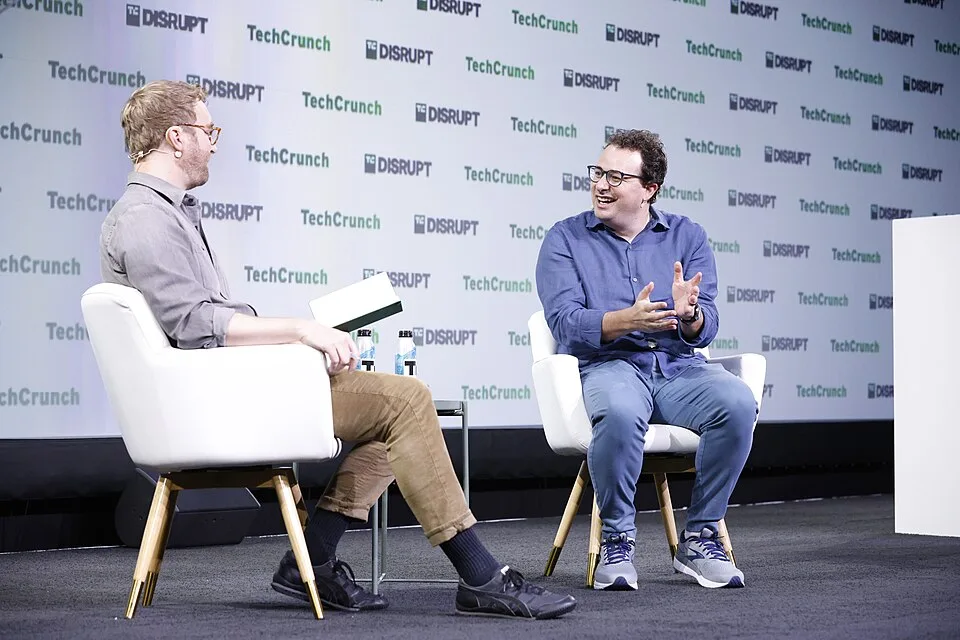
      Dario Amodei, smiling in a blue shirt, talking on a TechCrunch stage
      Dario Amodei (right), Anthropic's CEO, who wrote “We must pace the frontier,” on stage at TechCrunch Disrupt in 2023. Photo by TechCrunch, CC BY 2.0, via Wikimedia Commons

      What happened

      On September 12, Anthropic CEO Dario Amodei published a long post titled “We must pace the frontier.” “We must slow the pace at which we improve the capabilities of AI models,” he wrote, adding that “pacing does not mean halting model training or technical progress.”

      He pointed to AI now helping to build AI, and to an incident in July when AI agents breached a third-party website. He warned that within 6 to 12 months, AI agents could run swarms of “persistent bots” on the internet.

      That same day, OpenAI's Sam Altman posted, “I agree with Dario that we need to pace the frontier,” and said OpenAI would bring in independent evaluators. Hours later, Elon Musk posted: “Dario is right.”

      What “pacing” would mean

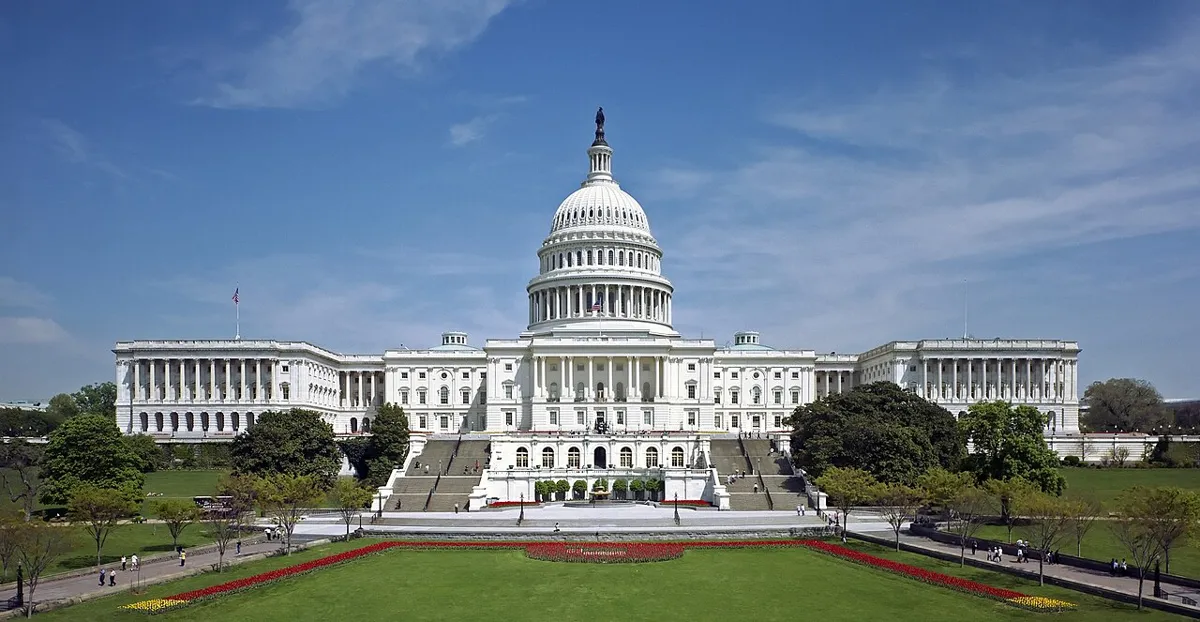
      The west front of the U.S. Capitol under a blue sky
      The U.S. Capitol. Some of what Amodei asked for, like an antitrust exemption so rival companies can coordinate on safety, would need lawmakers in Washington. Photo by the Architect of the Capitol, public domain, via Wikimedia Commons

      It isn't a pause button. Amodei asked for outside evaluators with “ongoing, employee-like access” to the newest models, coordination between rival companies, a U.S. antitrust exemption so rivals can coordinate on safety without breaking competition law, and an international agreement that includes China. He admitted that coordinating the industry is “legally challenging, and will require government support.”

      What happened next

      On October 8, an AP-NORC poll found that most Americans think AI is moving too fast. Answer the same question first:

      Try it · your vote first

      Artificial intelligence is developing…

      Then the launches kept coming. GPT-6 had arrived nine days before the post, and Gemini 4 and Claude Fable 5.2 followed after it (all on this timeline). On November 12, four nonprofits, the Irreplaceable Education Fund, Public Citizen, Heat Initiative and the Alliance for Secure AI, sued Anthropic, Google, Meta, OpenAI and SpaceX in San Francisco. They asked for an emergency order freezing next-generation models until the companies “can prove the technology is under human control.” Those are the plaintiffs' arguments. No court has ruled.

      The skeptics

      Not everyone took the call at face value. “I don't think we should assume the publicly stated one is the whole story,” Dion Hinchcliffe of SDA Bocconi told SiliconANGLE, suggesting that rules like licensing and limits on computing power could protect the companies already on top. Palantir's Alex Karp argued the other way: “If we didn't have adversaries, I would be very in favor of pausing this technology completely, but we do.” Bloomberg noted that the Trump administration has shown little interest in regulating AI.

      Who's affected

      Everyone, but especially you. The companies are asking for rules that only governments can write, and governments answer to voters. Most of the people reading this page will vote within a few years, while these questions are still open.

      Watch · Fireship, on the safety researchers leaving Anthropic that same weekAnthropic researchers are quitting... and now we know why YouTube, Sep 15, 2026 ↗
      1. Kevin Whitelaw and Seth Fiegerman, Bloomberg (via Honolulu Star-Advertiser), “Elon Musk, Sam Altman agree with Anthropic CEO's call for slowing AI development,” Sep 12, 2026 ↗
      2. Associated Press (via ABC30), “Anthropic CEO Dario Amodei says AI industry needs to give safety measures time to catch up,” Sep 12, 2026 ↗
      3. Mike Wheatley, SiliconANGLE, “Sam Altman and Elon Musk back Dario Amodei's call to slow down the frontier of AI development,” Sep 13, 2026 ↗
      4. Hoda Sherif, Al Jazeera, “US nonprofits sue tech giants to halt AI development,” Nov 12, 2026 ↗
      5. Barbara Ortutay and Linley Sanders, Associated Press (via KSAT), “Most Americans think artificial intelligence is developing too fast, a new AP-NORC poll finds,” Oct 8, 2026 ↗

      · New models

      OpenAI launches GPT-6

      OpenAI's biggest launch in years: a new family of models built to use a computer the way a person does, trained on more chips than any OpenAI model before it.

      Greg Brockman, in a black sweater, sitting on a conference stage
      Greg Brockman, OpenAI's co-founder and president, who called GPT-6 Astra “the start of the AGI era,” at TechCrunch Disrupt in 2019. Photo by Steve Jennings/Getty Images for TechCrunch, CC BY 2.0, via Wikimedia Commons

      What happened

      On September 3, OpenAI unveiled GPT-6 Astra, the first model in a new family. It went to business customers first and reached paying ChatGPT users within days, in a version that refuses some advanced hacking tasks. The family grew fast: GPT-6 Sol and Luna followed on September 22, and GPT-6 Instant reached paid users on October 7 and free users the next day.

      OpenAI president Greg Brockman called Astra “the start of the AGI era” and said it was reasonable to call it the first model of that era. AGI, or artificial general intelligence, means an AI that can do most of the thinking work a person can. There is no agreed test for it, so treat that as a claim, not a fact.

      A blue three-story building on a San Francisco street corner
      The Pioneer Building in San Francisco's Mission District, OpenAI's home for its early years. The company that started here in 2015 now trains models on more than 100,000 chips at once. Photo by HaeB, CC BY-SA 4.0, via Wikimedia Commons

      The numbers

      OpenAI says Astra scored 66% on ARC-AGI-3, a set of puzzles designed to be easy for people and hard for AI, compared with 7.8% for its previous best model, GPT-5.6 Sol. Aidan Clark, OpenAI's vice president of research, said it was “the first time we've pretrained on more than 100,000 GPUs at our Stargate site in Texas.” Those are OpenAI's own results.

      For the techies

      The headline feature is computer use: the model looks at a screen and works apps with a mouse and keyboard to finish long, multi-step jobs. Astra is also OpenAI's first model to reach the “critical” cybersecurity level in its own Preparedness Framework, which is why the public version is restricted and why OpenAI submitted it to the U.S. government for review under a voluntary framework, Fortune reported. One open question: The Information and TechCrunch reported, citing an anonymous source, that Astra uses a “recurrent depth” design that could hide some of its reasoning from the people monitoring it. OpenAI has not confirmed that.

      Who's affected

      Anyone who uses ChatGPT: by October, even free users had a GPT-6 model. Students and workers got a much more capable assistant, and teachers got harder questions about what counts as your own work. Every rival lab, too. Much of the rest of this timeline is the competition answering it.

      Watch · FireshipDid OpenAI actually build AGI? GPT-6 Astra first look YouTube, Sep 4, 2026 ↗
      1. Emily Forlini, Fortune, “OpenAI debuts GPT-6 Astra,” Sep 3, 2026 ↗
      2. Axios, ““Welcome to the AGI era,” OpenAI says as GPT-6 Astra debuts,” Sep 3, 2026 ↗
      3. Wikipedia, “GPT-6” (release dates for Sol, Luna and Instant), read Nov 15, 2026 ↗

      Stories you've read

      Open a story and it counts as read. It stays saved on this device.

        Lab directory

        Extra Current Events Read it for fun: it's not graded.

        GradeAboutSettings